

Characteristics
Exposure
Bloom Colors
Deer resistant
Season of Interest (Foliage)
Growth Rate
Lawn Replacement or Groundcover
Groundcover Foot-Traffic Tolerances
Foliage Color
Soil Moisture Preference
Juglans nigra Tolerance (Black Walnut)
Attracts Wildlife
Attributes
Flowering Months
Species
Cultivar
Common Name
- Spacing :
- 6
- -
- 12
- in
USDA Hardiness Zone
- Height :
- 6
- -
- 12
- in
- Spread :
- 6
- -
- 9
- in
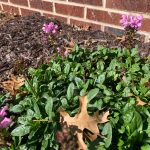
First Impression: Prunella vulgaris subsp. lanceolata, commonly known as Self-Heal, is a versatile herbaceous perennial found in various habitats, including woodlands, meadows, and disturbed areas. This low-growing plant typically reaches heights of 6 to 12 inches, forming spreading mats of square stems that root at the nodes. The lance-shaped leaves are arranged oppositely along the stems, featuring a slightly toothed margin and a soft, hairy texture. Self-Heal blooms from late spring to early fall, producing cylindrical spikes of tubular flowers that vary in color from shades of violet and purple to pink or white. Each flower has a distinctive hood-like upper lip and a three-lobed lower lip, creating a visually interesting inflorescence. Known for its adaptability, Self-Heal is often valued in both wild and cultivated settings, where it attracts pollinators and offers medicinal properties.
Habitat & Hardiness: Prunella vulgaris subsp. lanceolata grows in moist, disturbed areas, low meadows, open woodlands, forest edges, pasturelands, and along roadsides or lake margins. Two varieties of this species are known, with lanceolata being taller and erect, native to North America, and with lanceolate leaves. Prunella vulgaris subsp. vulgaris is a lawn weed introduced from Eurasia.
Plant Description: Prunella vulgaris, or Self-Heal, is a herbaceous perennial typically exhibiting square stems, a characteristic trait of the mint family (Lamiaceae), to which it belongs. The leaves are lance-shaped, opposite, and serrated along the margins. They have a soft, pubescent texture due to fine hairs covering the surface. The leaves grow in pairs along the stems and emit a mild minty fragrance when crushed. The inflorescence of Self-Heal is a dense, cylindrical spike, with whorls of tubular flowers arranged along the stem. Each flower has a bilabiate structure, featuring a hood-like upper lip and a three-lobed lower lip. The color of the flowers can range from violet and purple to shades of pink or white, adding visual diversity to the spike. Self-Heal typically grows in spreading mats, with stems that root at the nodes upon contact with the soil, facilitating its ability to colonize and form extensive patches. This low-growing habit allows Self-Heal to thrive in various habitats, from woodlands to meadows, making it a resilient and adaptable species. The plant’s growth pattern and medicinal properties have made it valued not only in natural ecosystems but also in cultivated gardens and herbal medicine.
Cultural & Maintenance Needs: Prunella vulgaris is a relatively low-maintenance plant and can thrive in a wide variety of cultural conditions. Self heal will thrive in partial shade to full sun and well-drained soils with consistent moisture and a wide range of pH.
Landscape Uses: Try incorporating Self-heal into your ground cover or living mulch gardens, woodland gardens, pollinator gardens, rock gardens and container plantings. This species may be useful where erosion control is the goal, in medicinal and herb gardens, edible gardens, deer resistant plantings, and pollinator gardens and cut flower gardens. Beneficial insects, butterfly garden, container garden, cottage garden, cut/dried flower garden, deer resistant plantings, groundcover, herb garden, medicinal garden, mass/group planting, low maintenance gardens, living/green mulch, naturalizing, open woodlands, perennial borders, pollinator garden, rain garden / storm water management, edible garden, restoration/conservation.
Ecological Benefits: The flowers of self-heal are visited by a wide variety of bees, butterflies and skippers and is a larval host plant to caterpillars to the Gray Marvel moth and Clouded Sulphur butterfly. Because of its bitter taste, these plants are generally avoided by mammalian herbivores.
Companion & Understudy Plants: Try pairing Prunella vulgaris with Heuchera americana ‘Dale’s Strain’, Heuchera villosa, Heuchera villosa ‘Autumn Bride’, Phlox subulata ‘Emerald Blue’, Phlox subulata ‘Emerald Pink’, Phlox subulata ‘Red Wings’ and Tiarella cordifolia depending on your design goals and the site’s cultural conditions. If Prunella vulgaris is not available, Prunella vulgaris ‘Magdalena’ may be a suitable substitute. You can also try Phlox subulata ‘Emerald Blue’ or Phlox subulata ‘Emerald Pink’