



Characteristics
Exposure
Bloom Colors
Deer resistant
Season of Interest (Foliage)
Growth Rate
Foliage Color
Soil Moisture Preference
Attracts Wildlife
Attributes
Flowering Months
Species
Common Name
- Spacing :
- 2
- ft
Native Status
USDA Hardiness Zone
- Height :
- 2
- -
- 3
- ft
- Spread :
- 2
- ft
FIRST IMPRESSIONS: Pycnanthemum muticum is an aromatic perennial wildflower. This mint relative bears oval toothed leaves on strong square stems. In summer, plants are topped by dense rounded clusters of tiny white to lavender tubular flowers. The leaves surrounding the flower clusters are highlighted with silver. Pollinators flock to the blooms in sunny gardens with average well drained soils.
HABITAT & HARDINESS: Pycnanthemum muticum occurs through most of the eastern United States from Main to Michigan and south to Georgia and Texas.
This species is indigenous to bogs, savannas, low meadows, low woods, balds and ridges.
Plants are hardy from USDA Zones 4-8.
PLANT DESCRIPTION: Pycnanthemum muticum is an upright branching perennial that expands into colonies from shallow rhizomes.
Stems are pubescent and square. They branch frequently in the upper half. Aromatic leaves are arranged opposite from each other on short petioles along the stems.
Leaf blades are finely serrate or entire and lanceolate or ovate. They are 1-3” long and ½-1” wide with pointed tips.
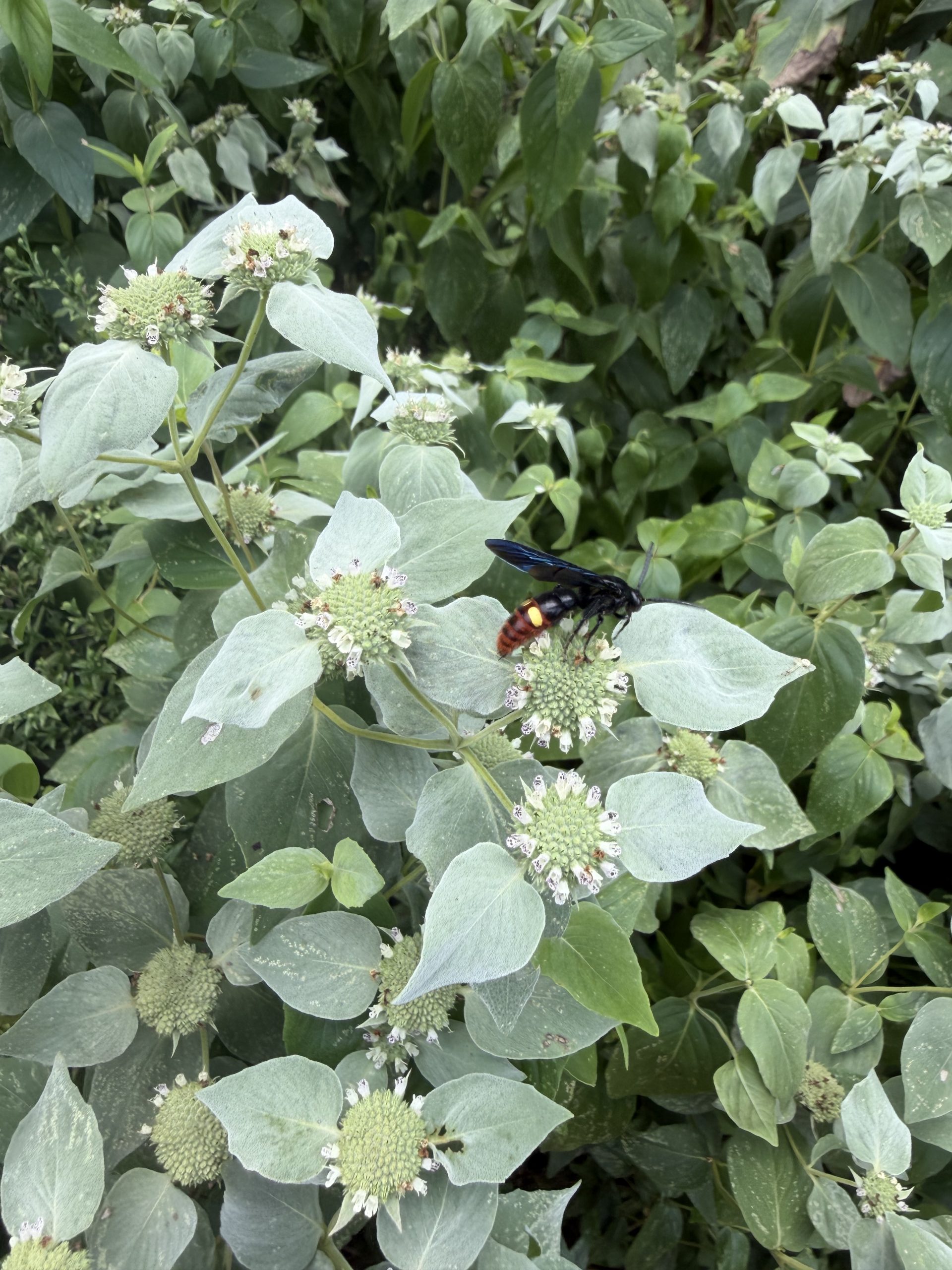
The stems terminate in rounded ½-2” dense disc-shaped flower cymules. The individual florets are tubular, fragrant and about 1/4” long with lobes toward the tip. Each corolla tube is actually a ring of united petals with a white or pinkish color and purple spots.
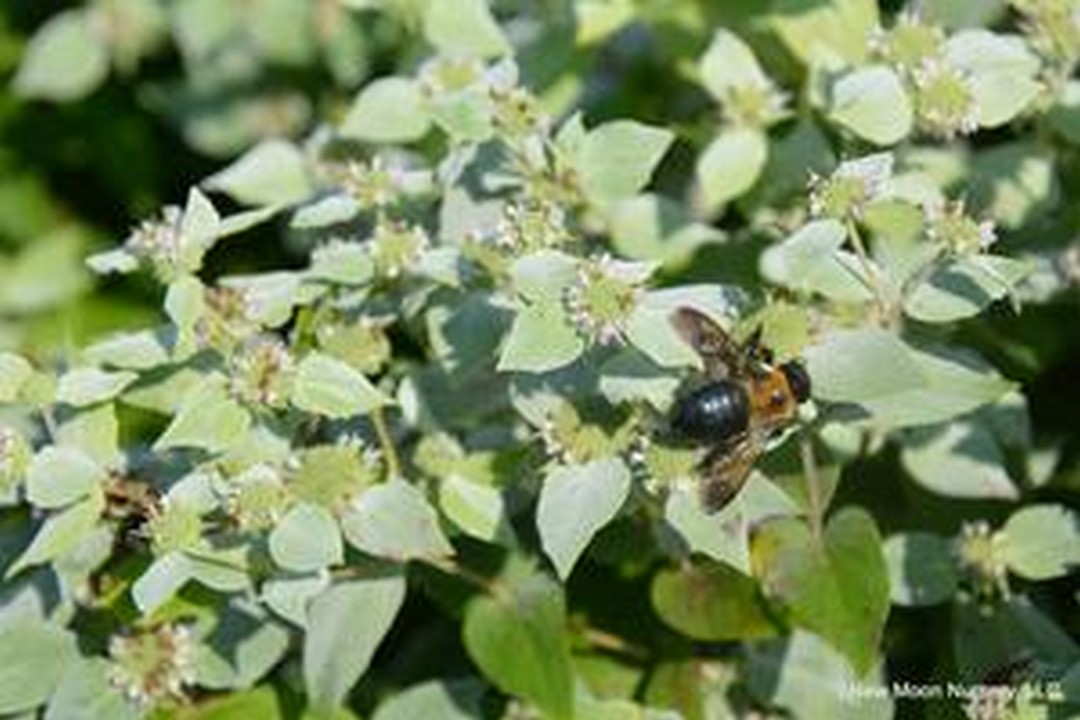
The leaves closest to each inflorescence are bract-like with a whitish patina. During the hot humid summer, the soothing minty fragrance and the frosty white bracts impart the illusion of coolness.
Blooming lasts for about 6 weeks and is followed by ovoid nutlets that are nestled into gray button-like cymes.
Plants grow 2-3’ tall with 2’ spread.
CULTURAL & MAINTENANCE NEEDS: Pycnanthemum muticum thrives in sunny or partly shaded sites with moist well drained average soil. Plants tolerate clay, heat and drought.
Desirable pollinators flock to the blooms but plants are fairly pest resistant. The aromatic foliage is unpalatable to deer, rabbits and other herbivores.
This rhizomatous species will ramble and expand to form colonies. The rhizomes are shallow, though, so unwanted plants are easy to pull.
LANDSCAPE USES: The mountain mints are listed on many “Top Ten Plants for Pollinators” list. Pycnanthemum muticum is a good choice for a Wildlife Garden or Meadow. Plants are also used as Butterfly Nectar Plants, Cut Flowers or as part of a Grouping or Mass Planting. This species has Showy Blooms and is appropriate for Cottage Gardens, Deer Resistant Plantings, Water-wise Landscapes, Low Maintenance Plantings, Rain Gardens and Perennial Borders.
COMPANION & UNDERSTUDY PLANTS: Try pairing Pycnanthemum muticum with Coreopsis tripteris, Rudbeckia hirta, Liatris spicata, Schizachyrium scoparium and Andropogon gerardii.
Pycnanthemum incanum has similar appearance and culture and could be substituted in some situations.
TRIVIA: The dense head-like flower cymes make this plant a pollinator paradise. Native bees, beneficial wasps, flies, beetles, skippers and small butterflies (especially hairstreaks) frequent the blossoms.
In the 2013 Penn State Extension Service Pollinator Trial “88 pollinator-rewarding herbaceous perennial plants were assessed and promoted to growers, landscapers, nursery operators, and homeowners…” Pycnanthemum muticum was rated #1 for longevity of flowers and #1 for diversity of pollinators. It also attracted the greatest number of insects of any plant. During a 2 minute time period, 78 insects visited Pycnanthemum muticum including 19 bees and syrphid flies.