
Characteristics
Exposure
Bloom Colors
Deer resistant
Season of Interest (Foliage)
Growth Rate
Foliage Color
Soil Moisture Preference
Juglans nigra Tolerance (Black Walnut)
Attracts Wildlife
Attributes
Flowering Months
Species
Common Name
- Spacing :
- 1
- -
- 2
- ft
USDA Hardiness Zone
- Height :
- 1
- -
- 2
- ft
- Spread :
- 8
- -
- 12
- in
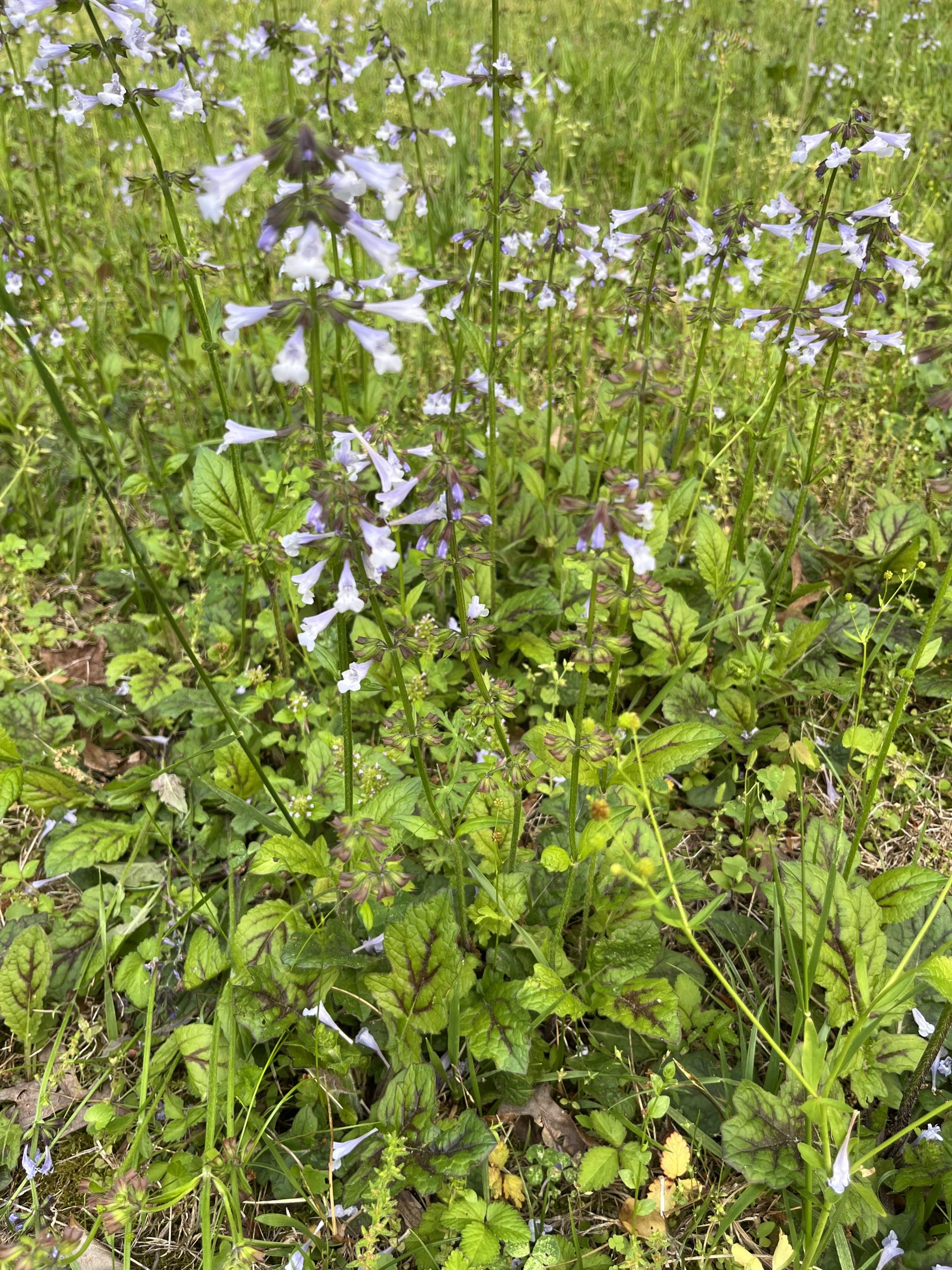
First Impression: Salvia lyrata, commonly known as Lyre-leaf Sage, is a herbaceous perennial with deeply lobed leaves resembling the shape of a lyre or musical instrument. These basal leaves are often green to gray-green, and their prominent veining adds texture to the foliage. The flowers of Salvia lyrata emerge on slender spikes, typically in shades of violet, purple, or blue, creating a visually appealing contrast against the foliage. The tubular flowers are arranged in whorls along the spikes, and their attractive coloration, coupled with the unique leaf shape, makes Lyre-leaf Sage a charming addition to gardens and naturalized areas. Typically a short lived perennial, but readily seeds in allowing for more genetic diversity.
Habitat & Hardiness: Salvia lyrata is found throughout the eastern and midwestern United States in fields, open woodlands, shorelines, and roadsides on many types of soil.This species is hardy in USDA Zones 5-8.
Plant Description: Salvia lyrata, commonly known as Lyre-leaf Sage, is a herbaceous perennial that has deeply lobed lyre-shaped leaves with several pairs of lateral lobes resembling the strings of the musical instrument. The lobes are often toothed, adding texture to the foliage. The leaves are typically green to gray-green, and their unique shape sets Lyre-leaf Sage apart from other salvias.
Lyre-leaf Sage produces spikes of tubular flowers that rise above the basal rosette of leaves. The flowers are arranged in whorls along the stems and can range in color from violet, pink and purple to shades of blue. The tubular structure of the flowers is characteristic of the Salvia genus, attracting pollinators like bees and butterflies. The bloom time is usually in late spring to early summer, adding a burst of color to the garden. As the season progresses, the plants shift to producing cleistogamous flowers, which are flowers that never open but produce fertile fruits.
The stems of Salvia lyrata are typically erect and rise above the basal leaves, holding the inflorescence. The flowering stems are sturdy and contribute to the overall vertical aspect of the plant. While not as conspicuous as the flowers or leaves, the stems play a crucial role in supporting the inflorescence and ensuring that the flowers are presented prominently. Lyre-leaf Sage has a basal rosette growth habit, with the leaves forming a low, spreading cluster close to the ground. The stems emerge from this basal rosette, carrying the inflorescence upward. The overall habit is relatively low-growing, making it suitable for ground cover in various garden settings. Its ability to spread makes it useful for naturalistic plantings and areas where a carpet of foliage is desired.
Salvia lyrata is known for its adaptability to different soil types, including well-drained soils and those with medium to poor fertility. It can thrive in both full sun and partial shade, making it versatile for various garden conditions. This native plant is also appreciated for its resilience and ability to naturalize in the landscape. Beyond its ornamental value, Salvia lyrata is valued for its adaptability to various soil conditions and its ability to thrive in both sunny and partially shaded locations.
Cultural & Maintenance Needs: This relatively low-maintenance perennial thrives in full sun in average to wet gravelly, sandy or rocky soils. This species will self-sow so deadheading may be necessary if naturalizing is not desired.
Landscape Uses: Salvia lyrata can be incorporated in to perennial borders, medicinal gardens, drought-tolerant landscapes, rain gardens, stream bank plantings, bird gardens, hummingbird gardens, container gardens, cottage gardens, woodland gardens, rock gardens, drought-tolerant gardens, and pollinator gardens. Beneficial Insects; Bird Garden; Butterfly Garden; Container Garden ;Cottage Garden; Cut/Dried Flower Garden; Deer Resistant Plantings; Low Maintenance Gardens; Mass/Group Planting; Naturalizing; Native Plant Garden; Medicinal Garden; Rain Garden / Stormwater Management; Pollinator Garden; Wetland/Bog Planting; Hummingbird Garden; Restoration/Conservation.
Ecological Benefits: Various types of bees have been recorded visiting the flowers and birds eat the seeds. Mammalian herbivores avoid the fragrant foliage.
Companion/Understudy Plants: Try pairing Salvia lyrata with Baptisia australis; Echinacea purpurea; Liatris spicata; Aster novae-angliae ‘Purple Dome’; Solidago rugosa ‘Fireworks’; Phlox divaricata ‘Blue Moon’; Phlox divaricata ‘May Breeze’; Phlox divaricata; Rudbeckia hirta; Asclepias tuberosa; Pensetmon digialis ‘Husker Red’; Helenium autumnale; Monarda didyma; Eryngium yuccifolium, and Heliopsis helianthoides depending on design goals and the site’s cultural conditions. If Salvia lyrata is not available try Senecio aureus or Antennaria plantaginifolia depending on design goals and the site’s cultural conditions.
Trivia: The other common name for Salvia lyrata is Cancer Weed because the leaves were once thought to cure cancer.