

Characteristics
Exposure
Bloom Colors
Deer resistant
Season of Interest (Foliage)
Foliage Color
Soil Moisture Preference
Juglans nigra Tolerance (Black Walnut)
Attributes
Species
Common Name
- Spacing :
- 2
- -
- 3
- ft
Native Status
USDA Hardiness Zone
- Height :
- 3
- -
- 5
- ft
- Spread :
- 2
- -
- 4
- ft
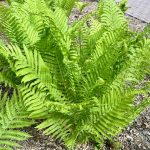
FIRST IMPRESSIONS: Matteuccia struthiopteris is an impressive deciduous fern with arching fronds forming an umbrella shape, typically 2-3 feet tall, but may grow in excess of 5 feet tall in wet conditions. The feathery frond’s appearance nods to the common name of Ostrich fern. In moist conditions, the plants will spread quickly and densely to cover ground and control erosion and stabilize stream banks. The species adapts to average soil in shady gardens with more restrained growth, but can go summer dormant if conditions become too dry. The emerging fiddleheads in the spring are notable and when cooked properly offer a seasonal culinary delicacy. In autumn, the foliage turns bright gold before fading away.
HABITAT & HARDINESS: Matteuccia struthiopteris occurs in Northeastern and Midwest US and into Canada, as well as Europe and Asia. Ostrich ferns prefer cool, moist sites, but will tolerate more sun when located in an environment that is constantly wet such as a streamside. This fern can adapt to average garden soil in shady gardens, but may suffer in prolonged heat or drought, though they’ll regrow from their roots even after a summer dormancy.
Plants are indigenous to swamps, bottomland woods & thickets. This fern forms colonies in rich boggy or moist loamy soils in shade or part shade.
Hardiness rating is from USDA Zones 2-8.
PLANT DESCRIPTION: Matteuccia struthiopteris have two types of fronds: large, sterile fronds that die back in winter and smaller, dark brown, fertile fronds that persist through winter. The sterile fronds of this fern are typically 3 to 5 ft. tall, once-pinnate, tapered at both base and tip, brown-stemmed, and slightly scaly. Fertile fronds are shorter, with edges of the frond turned in to form a plume persistent through winter that is studded with spores that will be released in the spring. Plants can spread via underground rhizomes and by spores.
Why are ferns so resilient? Perhaps it is due to their unusual and complicated reproduction strategy of using sporophytes and gametophytes.
What are sporophytes and gametophytes exactly? Well, they’re part of the reason why ferns are so fascinating. Sporophytes are the stage of a plant’s life cycle that we’re usually most familiar with—big and green, with lots of leaves. Sporophytes produce spores, which will each germinate into a gametophyte, and the gametophytes makes the eggs and sperm. Once fertilization occurs, a new sporophyte results, and the cycle continues. In flowering plants, the spore and gametophyte are hidden from plain sight, packed inside either seeds or pollen grains. But in ferns, the dust-like spores themselves leave the parent plant, are dispersed far and wide by the wind, and when they land, the gametophyte that germinates will be a tiny, independent and free-living little plant.–Posted in Plant Science on March 28, 2024, by Cosette Patterson, How Ferns Outlived the Dinosaurs–and Why that Matters Today.
CULTURAL & MAINTENANCE NEEDS: Easily grown in average, medium to wet soils in part shade to full shade. Best in rich soils with constant moisture. Tolerate: Rabbit, Heavy Shade, Erosion, Clay Soil, Wet Soil. The vigorous rhizomes spread by underground runners that form new plant colonies, which can be aggressive and may need to be divided in certain garden settings.
LANDSCAPE USES: Use in a woodland garden, shade border, or along a slope to prevent erosion. Ostrich ferns work well to naturalize or for use in a shady rain garden.
COMPANION & UNDERSTUDY PLANTS: Try pairing with Carex muskingumensis, Chelone glabra, Lobelia cardinalis.
Osmunda cinnamomea has similar cultural needs and can be substituted if needed.
TRIVIA: Matteuccia struthiopteris is a modern descendant of ancient ferns that served as a food source for some dinosaurs.
Genus name honors Carlo Matteucci (1800-1863), Italian physicist. The species name is a combination of the genus name of the ostrich (Struthio) and the Greek name for ferns (Pteris). Onoclea sensibilis looks very different but is among this fern’s nearest living relatives.